African Ikon Travel Journal
Planning to Tour Cape Town and the Greater Western Cape
Cape Town rewards a little curiosity. Behind its mountain views, colourful streets and vineyards are stories of Indigenous communities, ocean voyages, slavery, migration and resilience. Exploring with a knowledgeable local guide helps connect those stories to the places you visit today. African Ikon Travel offers private Cape Town city, Cape Peninsula, Cape Winelands and Garden Route tours, alongside private airport and Cape Town Cruise Terminal transfers, making it easier to shape a journey around your interests and pace.
01
Cape Town City: History, Culture and Remarkable Achievements
Start with the people who were here first. Khoekhoe pastoralists and San hunter-gatherers lived in the region long before Portuguese voyages reached southern Africa. Bartolomeu Dias rounded the southern tip of Africa in 1488, and Vasco da Gama followed on his voyage to India in 1497. These voyages were not the beginning of Cape society, nor did they establish a Portuguese colony here. The Dutch East India Company established its refreshment station at Table Bay in 1652, setting in motion colonial expansion, Indigenous dispossession and an economy increasingly dependent on enslaved labour.
A city tour can bring these histories into focus through places such as the Castle of Good Hope, the Company's Garden, the Iziko Slave Lodge, District Six and the Bo-Kaap. People brought to the Cape under slavery came from diverse parts of Africa and Asia, including Madagascar, India and the Indonesian archipelago. Cape Muslim communities, often described as Cape Malay, developed through these complex histories. Their contributions include skilled craftsmanship, religious and cultural traditions, foodways and language. The Bo-Kaap is a living neighbourhood, not simply a colourful photo stop: visit respectfully and ask before photographing residents.
Cape Town also holds an important place in medical history. On 3 December 1967, Dr Christiaan Barnard led the team that performed the world's first human-to-human heart transplant at Groote Schuur Hospital. A visit to the Heart of Cape Town Museum can add this story to a city itinerary, subject to booking and opening arrangements. African Ikon Travel's local guides can help connect landmarks with the people behind them, while allowing time for your particular interests rather than rushing through a checklist.
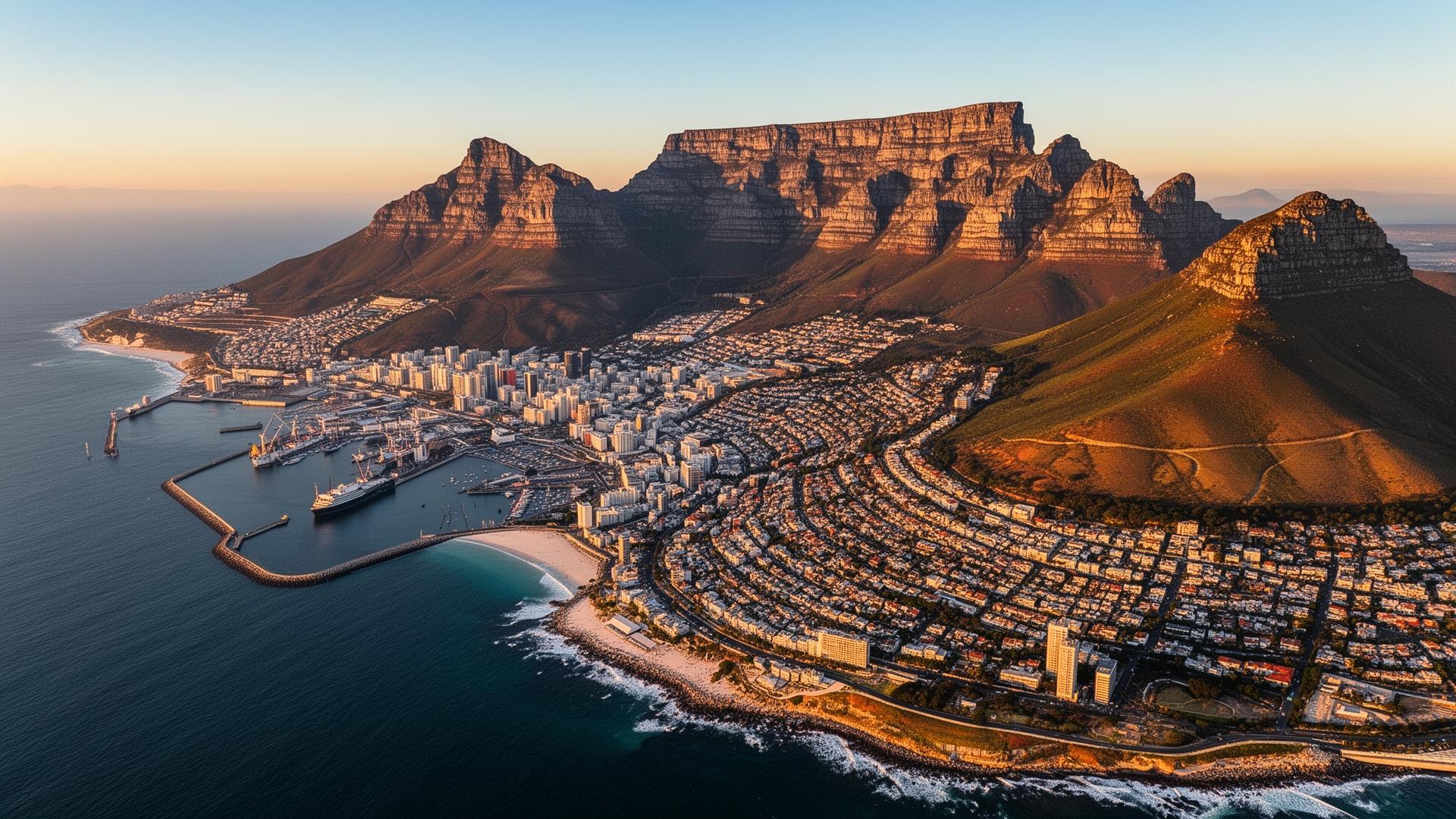
- Suggested photographs to source: a wide Cape Town city view, the Castle of Good Hope, a respectful Bo-Kaap streetscape and an authorised museum image.
- Planning note: confirm museum opening times and admission arrangements before finalising your day.
02
The Cape Peninsula: A Full Day Along the Coast
The Cape Peninsula deserves a day of its own. A private route can take in Atlantic seaboard scenery, Hout Bay, Chapman's Peak Drive when open, and the Cape Point section of Table Mountain National Park. The order of stops should respond to traffic, weather and your accommodation location. Leaving room for viewpoints and an unhurried lunch makes the day more enjoyable than trying to stop everywhere.
Cape Point and the Cape of Good Hope offer dramatic headlands, walking opportunities and distinctive fynbos landscapes. They are not Africa's southernmost point: that distinction belongs to Cape Agulhas, farther east. Wildlife is best appreciated at a distance. Never feed baboons, keep food out of sight and follow park guidance.
On the False Bay side, Simon's Town and the African penguin viewing areas at Boulders are popular stops. Stay on designated routes and give the penguins space. Depending on your priorities, the return journey might include a coastal village stop or more time at a principal attraction. African Ikon Travel can shape a private Peninsula day around scenery, wildlife, photography or gentler sightseeing.
- Suggested photographs to source: Chapman's Peak coastal views, Cape Point's headlands and African penguins photographed from designated visitor areas.
- Planning note: park entry, attraction access and weather-related road closures should be checked when arranging your tour.
03
The Cape Winelands: Huguenot Heritage, Food and Language
Stellenbosch, Franschhoek and Paarl combine mountain scenery, historic streets, wine estates and excellent opportunities to explore Cape food. Wine production at the Cape predates the French Huguenots: Jan van Riebeeck recorded wine being made in 1659. Its development also depended on the labour and knowledge of enslaved people and, later, generations of farmworkers whose stories deserve a place alongside those of estate owners.
French Huguenots were Protestant refugees fleeing religious persecution, particularly after Louis XIV revoked the Edict of Nantes in 1685. Some reached the Cape from 1688 through Dutch East India Company-supported settlement arrangements, which included passage and allocations of land and assistance. The Dutch authorities valued their potential as agricultural settlers, including the wine-growing knowledge some brought. It is more accurate to describe these supported arrangements than to suggest that every refugee received an identical free passage and ready-made wine farm. Franschhoek's Huguenot Memorial Museum offers a useful place to explore this history.
Afrikaans also has a more complex origin than a single exchange between French settlers and Cape Malay people. It developed over generations from Dutch in a multilingual colonial society, shaped by contact among settlers, enslaved people and Indigenous communities. Cape Muslim communities made an important contribution, including a written tradition of Afrikaans in Arabic script. Huguenot settlers gradually adopted Dutch under colonial pressure and through integration; they did not single-handedly launch Afrikaans. A thoughtfully guided Winelands day makes space for this cultural history as well as tastings, regional cuisine and scenery.
- Suggested photographs to source: Franschhoek's Huguenot Monument, vineyard landscapes around Stellenbosch and a Cape food setting photographed with permission.
- Planning note: choose a manageable number of estates and confirm tasting reservations; non-drinkers can focus on gardens, food, heritage and views.
04
Adventure Days: Choose the Activity, Then Plan the Transport
Adventure around Cape Town can be as gentle or demanding as you choose. Options include guided mountain walks, sea kayaking, surfing lessons and coastal boat trips. Match the activity to your experience, mobility and comfort level rather than choosing solely for the photograph. Table Mountain's cableway offers another way to experience the mountain, but operations depend on conditions and scheduled maintenance.
Book specialist activities with suitably qualified operators and follow their safety instructions. Mountain weather can change quickly, while wind and sea conditions may alter or cancel water-based outings. For hiking, use an appropriate route, avoid walking alone and carry water, sun protection and warm layers. A spare day or flexible alternative is especially useful if an outdoor activity is a highlight of your trip.
African Ikon Travel can assist with the private transport side of your plans; specialist guiding, equipment, activity fees and availability should be confirmed separately. If wildlife is on your wish list, the company also offers transport for Aquila day safaris and Inverdoorn overnight stays. These are private reserve experiences outside the city, and animal sightings cannot be guaranteed.
- Suggested photographs to source: a guided mountain walk, professionally operated kayaking and a scenic alternative for poor-weather days.
- Planning note: discuss fitness requirements, age restrictions, cancellation terms and included equipment directly with the activity operator.
05
The Garden Route and Bringing Your Itinerary Together
The Garden Route is a multi-day extension, not a comfortable day trip from Cape Town. Common stops include Mossel Bay, Wilderness, Knysna and Plettenberg Bay, with some itineraries continuing to Tsitsikamma in the Eastern Cape. Beaches, forests, estuaries and walking trails offer a different rhythm from city sightseeing. Oudtshoorn and the Cango Caves can be included as an inland detour, rather than treated as stops on the coastal route itself.
For a balanced holiday, begin with a city day, set aside separate days for the Peninsula and Winelands, and leave some flexible time for adventure or independent exploring. Add several nights if you want to travel the Garden Route without spending most of the experience in a vehicle. Share your travel dates, group size, accommodation, luggage requirements and must-see places with African Ikon Travel so that driving distances and stops can be planned realistically.
Private airport or Cape Town Cruise Terminal transfers can simplify your arrival and departure, particularly when travelling with luggage or coordinating a wider itinerary. African Ikon Travel is one of the individual authorised airport taxi and shuttle operators at Cape Town International Airport. Ask for a tailored quote and confirm what is included, such as transport, guiding, entrance fees, meals and accommodation where relevant. For the photographs suggested throughout this guide, use your own images or appropriately licensed photographs; the suggestions are sourcing briefs, not supplied or cleared image files.
- Suggested photographs to source: Wilderness coastline, Knysna's lagoon and Heads, and a forest or coastal trail near Tsitsikamma.
- Image checklist: verify usage rights, credit requirements and location accuracy, and obtain consent for identifiable people where appropriate.
Frequently asked questions
How many days should I allow for Cape Town and the Western Cape?
Four to five days gives you room for the city, Peninsula, Winelands and some flexible time. Add several nights for the Garden Route, with the exact duration depending on your stops and whether you return to Cape Town by road.
Can I combine the Cape Peninsula and Winelands in one day?
It is better to give each its own day. Combining them involves substantial driving and leaves little time to enjoy the main attractions, meals or tastings.
How much do African Ikon Travel's private day tours cost?
The private city tour is R4,800 flat for 1–6 guests. A full-day Cape Peninsula or Cape Winelands tour is R6,390 flat for 1–6 guests. Confirm the current inclusions and any separate entrance, tasting or meal charges when booking. Garden Route journeys and other tailored arrangements require a quote based on the itinerary and group requirements.
Did the French Huguenots introduce wine-making and Afrikaans to the Cape?
Neither began solely with the Huguenots. Cape wine production was recorded before their arrival, although some Huguenot settlers contributed agricultural and viticultural knowledge. Afrikaans developed from Dutch through sustained contact among diverse communities, with important contributions from enslaved people, Indigenous communities and Cape Muslims.
Can a tour include Cape Malay food and cultural history?
Yes. Ask to include Bo-Kaap heritage and Cape Malay food experiences in your city plans, subject to availability. Approach the neighbourhood as a living community, respect religious spaces and arrange any hosted food experience in advance.
Can African Ikon Travel arrange arrival transfers as well as touring?
Yes. African Ikon Travel offers private Cape Town International Airport and Cape Town Cruise Terminal transfers alongside private tours. Provide your flight or ship details, accommodation address, passenger numbers and luggage requirements when requesting arrangements.